Prestressing Duct Layout and Construction Control in Hydraulic Structures
Site-based guidance on tendon-duct alignment, deviation zones, fixing, concrete placement protection and grouting preparation in heavily reinforced hydraulic structures.
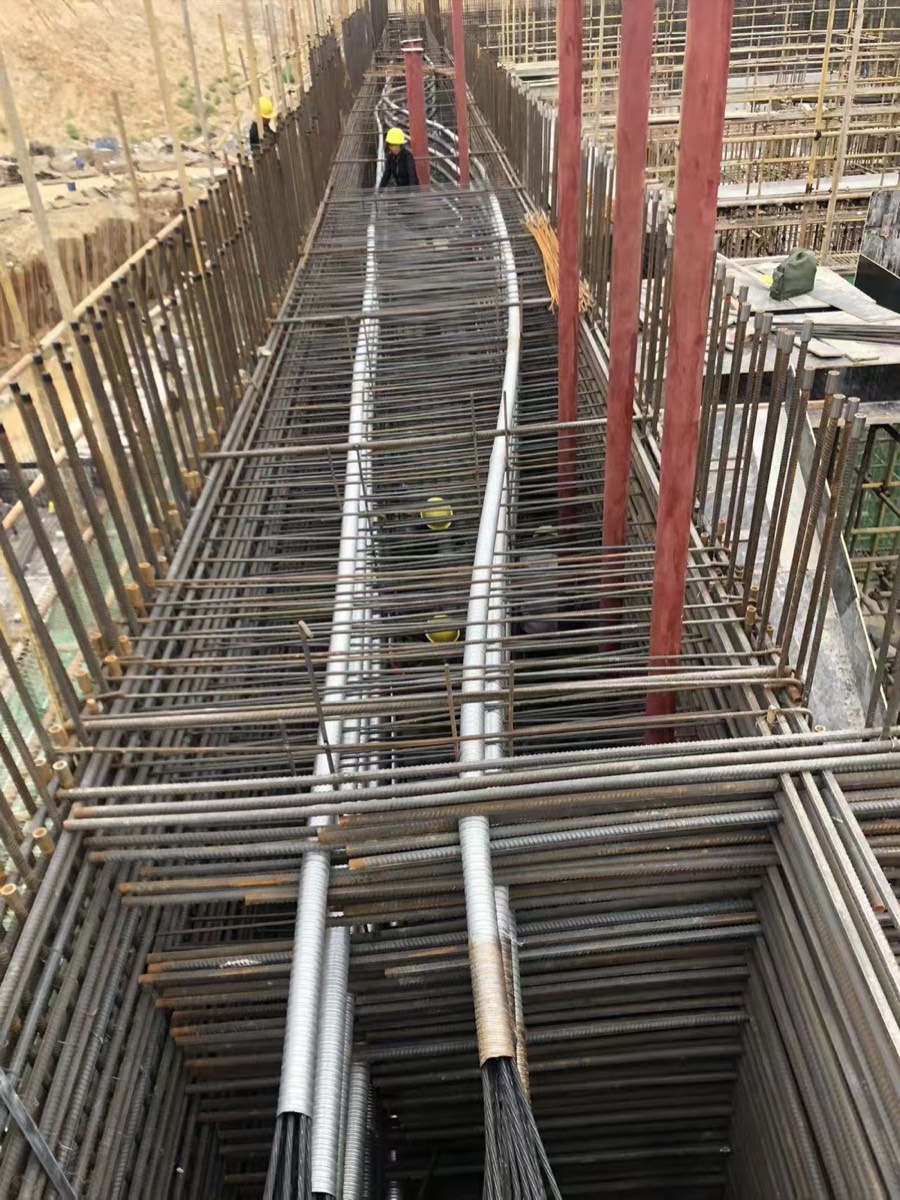
Why duct coordination must start early
Thick concrete members in hydraulic works often combine dense reinforcement, embedded items and prestressing ducts. The ducts must follow the design profile while retaining workable space for concrete placement, vibration, stressing and grouting. Structural, prestressing and embedded-item drawings should therefore be coordinated in one reference system before installation.
Alignment, deviation and fixing
Duct deviation zones should remain smooth and comply with the approved curvature and detailing requirements. Supports need sufficient spacing and stiffness to resist disturbance from access, reinforcement work and concrete placement. Sharp bends should not be improvised on site, and ducts should not be forced out of profile simply to clear reinforcement.
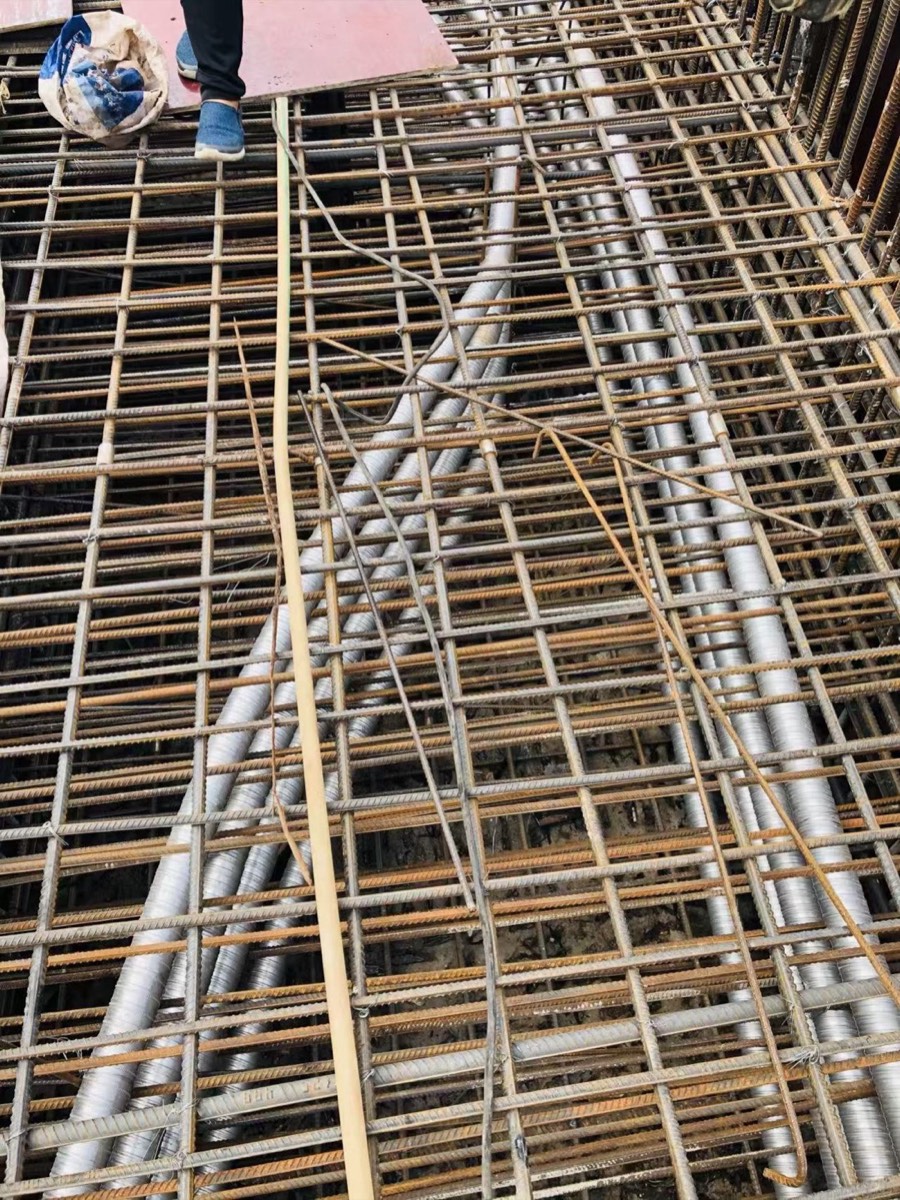
Clearance in congested reinforcement zones
Where ducts separate, cross or approach anchorage zones, verify clearances to main bars, links, embedded items and formwork. Conflicts require coordinated resolution by the design and construction teams; load-carrying reinforcement must not be cut and tendon control points must not be changed without approval. Local sections or three-dimensional coordination views can clarify the installation sequence.
Checks before and during concreting
Before concreting, inspect duct coordinates, joint sealing, support stability, end protection and grout or vent connections. During placement, avoid direct contact between vibrators and ducts, and monitor for uplift, displacement or local deformation. Congested zones also require confirmation that concrete can flow and be compacted effectively.
Complete the stressing and grouting record
Stressing should follow the approved method, required concrete strength, valid equipment calibration and specified sequence, with complete pressure, elongation and anomaly records. For bonded systems, verify grout materials, equipment, vent routes and anchorage sealing. Because hydraulic structures depend on durability and long-term service, records should remain traceable to each tendon and duct.
Discuss an engineering issue